
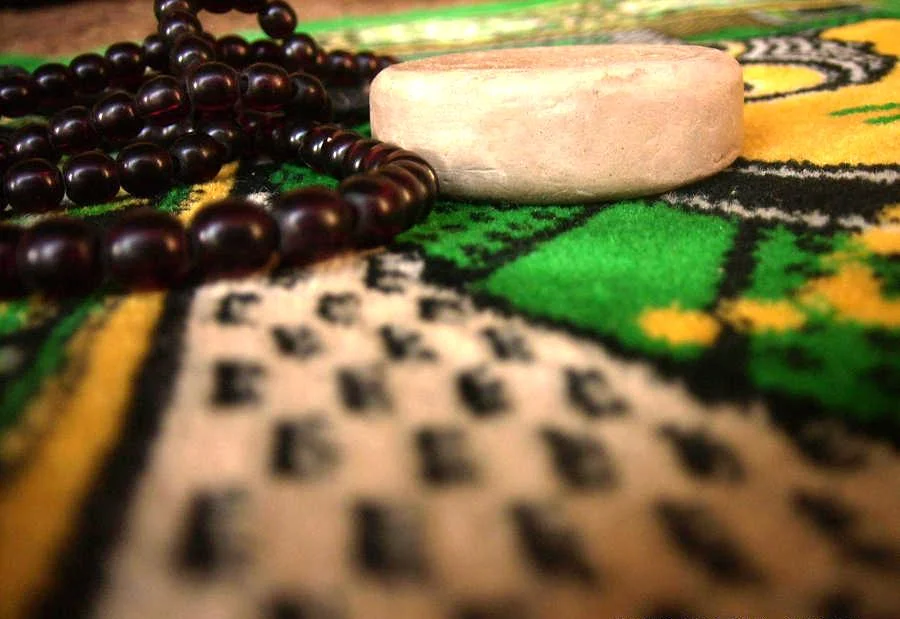
The use of a sajdagah (also spelled sajdaga or referred to as turbah or mohr in Persian) by Shia Muslims during prayer is a distinctive practice rooted in religious, historical, and jurisprudential traditions. A sajdagah is a small piece of clay, often made from the soil of Karbala (where Imam Hussain was martyred), used as a surface for prostration (sujud) during Salah (Islamic prayers). This practice is primarily associated with Twelver Shia Muslims and reflects both theological beliefs and practical rulings derived from Islamic sources. Below is a detailed analysis of why Shias use the sajdagah, covering its religious basis, historical context, jurisprudential reasoning, and cultural significance.
1. Religious Basis for Using the Sajdagah
The primary reason for the use of a sajdagah in Shia Islam is the belief that prostration during prayer must be performed on natural, earth-based materials, as opposed to man-made surfaces like carpets or rugs. This belief stems from interpretations of hadith and the practices of Prophet Muhammad and the Imams of the Ahl al-Bayt (the Prophet’s family).
Qur’anic Foundation
The Qur’an does not explicitly mandate prostrating on specific materials, but it emphasizes the act of sujud as a fundamental part of worship (e.g., Qur’an 15:29, 96:19). Shia scholars interpret the act of prostration as requiring direct contact with the earth, symbolizing humility and submission to Allah. The sajdagah ensures that this connection to the earth is maintained during prayer.
Hadith Evidence
Several hadiths attributed to Prophet Muhammad and the Shia Imams support the practice of prostrating on natural materials:
- Hadith on Prostration on Earth: A well-known hadith in both Shia and Sunni sources narrates that the Prophet said, “The earth has been made a place of prostration and a means of purification for me” (Sahih al-Bukhari, Hadith 438; Sahih Muslim, Hadith 521). Shia scholars interpret this to mean that prostration should ideally be on natural earth or its derivatives, such as clay, stone, or plant-based materials.
- Imam Ja’far al-Sadiq’s Guidance: In Shia tradition, Imam Ja’far al-Sadiq (the sixth Imam) is reported to have said, “Prostration is not permissible except on the earth or what grows from it, except that which is eaten or worn” (Al-Kafi, vol. 3, p. 323). This excludes man-made materials like carpets or synthetic fabrics, which are commonly used in prayer settings.
- Preference for Karbala’s Soil: The soil of Karbala is considered particularly sacred due to its association with the martyrdom of Imam Hussain in 680 CE. A narration from Imam Ali ibn Abi Talib states, “Prostrate on the soil of Hussain, for it is a means of blessings and acceptance of your prayers” (Bihar al-Anwar, vol undertake a detailed examination of the reasons behind the Shia practice of using a sajdagah during prayer, supported by historical context, Islamic hadith, and jurisprudential reasoning.
1. Religious Basis for Using the Sajdagah
The core rationale for using a sajdagah lies in the Shia belief that prostration (sujud) during Salah must be performed on natural, earth-derived materials. This practice is grounded in interpretations of Islamic sources, including the Qur’an, hadith, and the teachings of the Ahl al-Bayt (the Prophet’s family).
Qur’anic Foundation
While the Qur’an does not explicitly specify the material for prostration, it emphasizes sujud as an act of humility and submission to Allah (e.g., Qur’an 15:29, 96:19). Shia scholars argue that prostrating on the earth or its natural derivatives enhances the spiritual significance of this act, symbolizing a direct connection to God’s creation.
Hadith Evidence
Several hadiths, recognized in both Shia and Sunni traditions, support prostrating on natural materials:
- Prophet Muhammad’s Practice: A hadith in Sahih al-Bukhari and Sahih Muslim states, “The earth has been made a place of prostration and a means of purification for me” (Sahih al-Bukhari, Hadith 438; Sahih Muslim, Hadith 521). Shia scholars interpret this to mean that prostration should ideally occur on natural earth or materials derived from it, such as clay, stone, or plant-based substances (excluding edible or wearable items like cotton or food crops).
- Teachings of the Imams: Imam Ja’far al-Sadiq, the sixth Shia Imam, is quoted as saying, “Prostration is not permissible except on the earth or what grows from it, except that which is eaten or worn” (Al-Kafi, vol. 3, p. 323). This ruling excludes man-made materials like carpets, rugs, or synthetic fabrics, which are commonly used in many Sunni prayer settings.
- Soil of Karbala: The preference for using clay from Karbala is rooted in narrations that highlight its spiritual significance. A tradition attributed to Imam Ali ibn Abi Talib states, “Prostrate on the soil of Hussain, for it is a means of blessings and acceptance of your prayers” (Bihar al-Anwar, vol. 98, p. 135). The soil of Karbala is seen as sacred due to its association with Imam Hussain’s martyrdom, believed to imbue it with spiritual blessings (barakah).
Jurisprudential Reasoning
Shia jurisprudence (fiqh), based on the Ja’fari school, mandates that prostration must be performed on specific materials:
- Permissible Materials: Earth, stone, clay, or non-edible plant-based materials (e.g., leaves or wood, but not cotton or linen used for clothing).
- Prohibited Materials: Man-made surfaces (e.g., carpets, synthetic mats) or edible/wearable items (e.g., wheat, cotton). The sajdagah, typically made from baked clay, fulfills these requirements and ensures compliance with Shia rulings. It is portable, practical, and allows worshippers to maintain the prescribed conditions for valid prayer, even in environments where natural earth is unavailable.
2. Historical Context
The use of a sajdagah has historical roots in the practices of the Prophet and his household, which were later formalized by the Shia Imams. Historical accounts suggest that the Prophet himself prostrated on natural surfaces, such as the earth or straw mats, during his prayers (Sahih al-Bukhari, Hadith 1206). The Imams of the Ahl al-Bayt, particularly Imam Ali and his descendants, continued this practice, emphasizing its importance in maintaining the purity of worship.
Karbala and the Symbolism of Imam Hussain
The specific use of Karbala’s soil emerged after the martyrdom of Imam Hussain in 680 CE. Karbala became a sacred site for Shia Muslims, symbolizing sacrifice, resistance against oppression, and devotion to the Ahl al-Bayt. The soil from this location was revered as a relic of Imam Hussain’s martyrdom, and its use in prayer became a way to spiritually connect with his sacrifice. Over time, Shia communities began shaping this soil into small, portable clay tablets (turbah) for use in Salah.
Evolution of the Practice
While the use of natural materials for prostration predates the Battle of Karbala, the emphasis on Karbala’s soil became a distinct marker of Shia identity, particularly during periods of sectarian tension. For example, during the Umayyad and Abbasid eras, when Shia Muslims faced persecution, practices like using a sajdagah helped distinguish their religious identity and express loyalty to the Ahl al-Bayt.
3. Theological and Spiritual Significance
The sajdagah holds profound spiritual meaning for Shia Muslims, beyond its practical function:
- Symbol of Humility: Prostrating on the earth or clay reflects humility, as it connects the worshipper directly to God’s creation. The act of placing one’s forehead on the ground symbolizes complete submission to Allah.
- Connection to Karbala: Using a sajdagah made from Karbala’s soil serves as a reminder of Imam Hussain’s sacrifice and the values of justice, resistance, and martyrdom. It transforms each prayer into an act of remembrance (dhikr) of the Ahl al-Bayt.
- Blessings (Barakah): Shia tradition holds that the soil of Karbala carries divine blessings due to its association with Imam Hussain. Prostrating on it is believed to enhance the spiritual rewards of prayer and bring the worshipper closer to Allah.
- Unity and Identity: The sajdagah is a visible marker of Shia identity, fostering a sense of community and shared devotion among Twelver Shias worldwide.
4. Jurisprudential Differences with Sunni Islam
The use of a sajdagah is one of the visible differences between Shia and Sunni prayer practices, rooted in differing interpretations of Islamic law:
- Sunni Perspective: Most Sunni scholars permit prostration on any clean surface, including carpets or prayer rugs, based on the general principle that the earth is a place of worship (Sahih Muslim, Hadith 521). While some Sunni hadiths mention the Prophet prostrating on earth or mats, there is no strict requirement to avoid man-made surfaces.
- Shia Perspective: The Ja’fari school of jurisprudence, followed by Twelver Shias, interprets the hadith more strictly, limiting permissible surfaces to natural, earth-based materials. This stems from the emphasis on following the practices of the Ahl al-Bayt, who are considered authoritative interpreters of the Prophet’s Sunnah.
This difference does not invalidate either practice but reflects the diversity of Islamic jurisprudence. However, the use of a sajdagah has sometimes been misunderstood or criticized by some Sunni Muslims, particularly in regions with sectarian tensions, as a form of innovation (bid’ah). Shia scholars counter that the practice is firmly rooted in authentic hadiths and the Prophet’s example.
5. Cultural and Practical Aspects
The sajdagah is not only a religious tool but also a cultural artifact within Shia communities:
- Material and Design: A sajdagah is typically a small, flat tablet made from baked clay, often inscribed with phrases like “Ya Hussain” or verses from the Qur’an. While clay from Karbala is preferred, other natural materials (e.g., plain soil, stone, or wood) are permissible if Karbala’s soil is unavailable.
- Portability: The compact size of the sajdagah makes it easy to carry, allowing Shia Muslims to perform valid prayers anywhere, even in non-traditional settings like homes, offices, or mosques with carpeted floors.
- Cultural Significance: In Shia communities, the sajdagah is often treated with reverence. It may be passed down through generations or gifted during religious occasions. Some Shias collect turbahs from sacred sites, such as Karbala or Najaf, as spiritual mementos.
- Variations Across Shia Communities: While Twelver Shias universally use the sajdagah, other Shia sects, such as Ismailis or Zaydis, may not emphasize this practice to the same extent, reflecting differences in their jurisprudential traditions.
6. Addressing Misconceptions
The use of a sajdagah has occasionally been misunderstood, particularly in Sunni-majority regions or among those unfamiliar with Shia practices:
- Misconception of Idolatry: Some critics mistakenly claim that Shias worship the sajdagah or treat it as an idol. Shia scholars clarify that the sajdagah is merely a tool to fulfill the conditions of valid prostration, not an object of worship. Prostration is directed solely to Allah, in line with Islamic monotheism (tawhid).
- Sectarian Tensions: In some contexts, the sajdagah has been politicized as a marker of Shia identity, leading to debates or misunderstandings. Shia scholars emphasize that the practice is a matter of jurisprudence, not a point of division, and encourage mutual respect among Muslims.
- Practicality Over Ritualism: While the sajdagah is revered, it is not mandatory to use one made from Karbala’s soil. Any natural, non-edible material suffices, ensuring that the practice is accessible to all Shias, regardless of location or resources
The use of a sajdagah by Shia Muslims is a deeply rooted practice grounded in religious, historical, and jurisprudential traditions. It reflects the Shia emphasis on prostrating on natural, earth-based materials, as supported by hadiths from the Prophet and the Imams, particularly Imam Ja’far al-Sadiq. The preference for Karbala’s soil adds a layer of spiritual significance, connecting worshippers to the sacrifice of Imam Hussain and the values of the Ahl al-Bayt. Beyond its practical function, the sajdagah serves as a symbol of humility, devotion, and Shia identity.
While differences in prayer practices between Shia and Sunni Muslims exist, the sajdag22/01/2025 11:58:53 AM GMT+5:30ah is not a point of contention but a reflection of the rich diversity within Islamic tradition. For Shia Muslims, using a sajdagah enhances the spiritual experience of Salah, ensuring compliance with their jurisprudential rulings and fostering a connection to the sacred history of Karbala. When engaging with this practice, whether as a Shia or a non-Shia, understanding its religious and cultural context promotes mutual respect and appreciation for Islamic pluralism.